

If you've ever woken up with a dry throat, dealt with constant dust no matter how often you clean, or noticed your allergies flare up the moment you walk indoors, the problem probably isn't your skin, your sinuses, or your pillow. It's your air.
In Dubai, where homes and offices are sealed tight for almost nine months of the year to keep the AC running, indoor air quality becomes a different kind of problem than it is in cooler climates. Outdoor air rarely gets a chance to flush through the space. Whatever is circulating indoors — dust, humidity, recycled CO2, residue from cleaning products — just keeps recirculating. Most people never test for it. They just live with the symptoms and assume it's normal.
This guide breaks down what indoor air quality testing actually involves, why it matters more in Dubai than almost anywhere else, and what you should expect from a proper assessment.
Why Indoor Air Quality Is a Bigger Issue in Dubai Than People Realize
Dubai's climate creates a unique set of conditions that most residential and commercial spaces simply weren't designed to handle well.
Buildings here are built around one priority: keeping cool air in and hot air out. That means tightly sealed windows, minimal natural ventilation, and AC systems running almost continuously for most of the year. The result is a home that's comfortable in temperature but often poor in air performance.
A few things compound the issue:
Limited fresh air exchange. Most residential AC systems recirculate the same indoor air instead of pulling in and filtering fresh outdoor air. Over time, this allows carbon dioxide, volatile organic compounds (VOCs), and airborne particles to build up.
Humidity swings. Dubai's outdoor humidity is high for large parts of the year, and indoor AC systems often struggle to regulate moisture properly, leading to condensation, musty smells, and conditions that support mold and dust mites.
Dust infiltration. Sandy, dusty outdoor conditions mean even well-sealed homes accumulate fine particulate matter (PM2.5 and PM10) faster than expected, especially around AC ducts and vents that haven't been cleaned in a while.
Aging or poorly maintained duct systems. A lot of villas and apartments in Dubai run on duct systems that were installed years ago and rarely inspected. Dust, bacteria, and even mold can build up inside ducts without any visible sign on the surface.
None of these issues show up by just looking around a room. They show up in test results — and in how you feel.
The Symptoms People Usually Blame on Everything Except Their Air
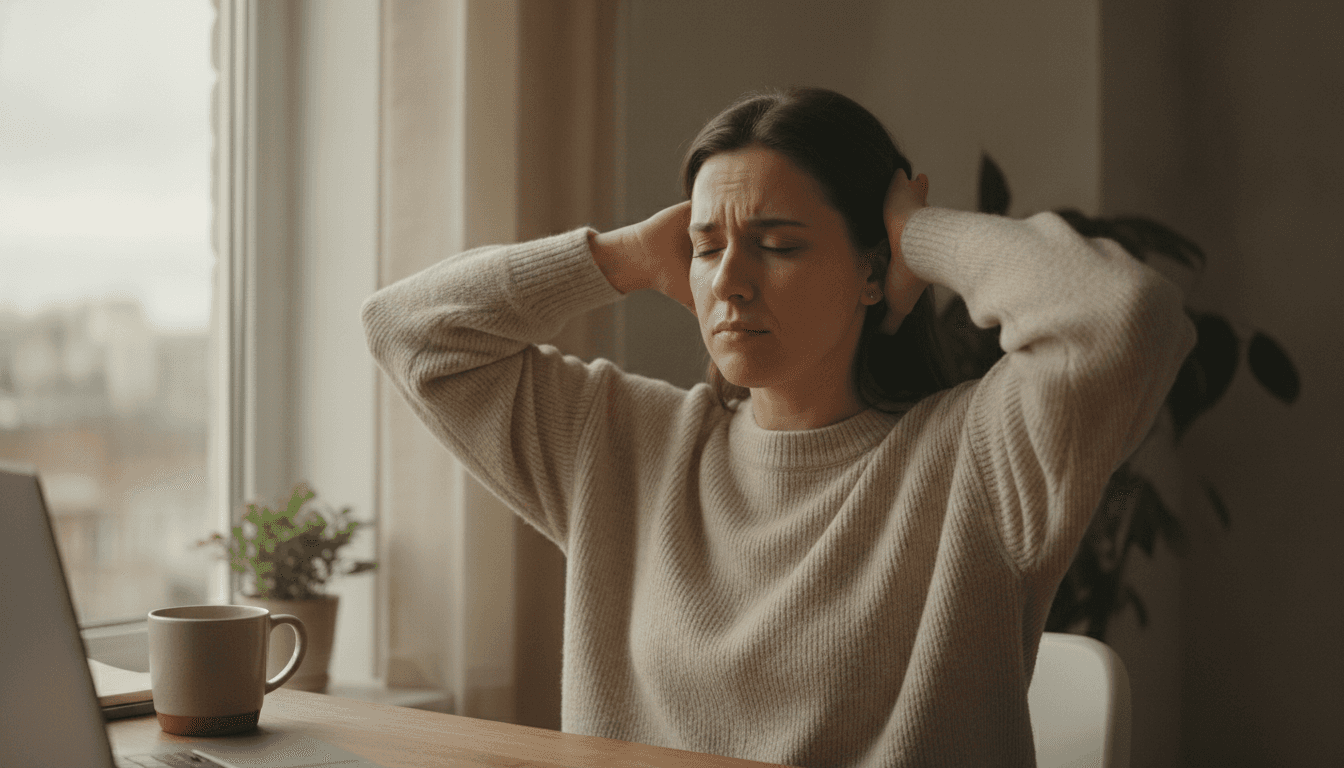
Poor indoor air quality doesn't usually announce itself. It shows up as a collection of small, easy-to-dismiss symptoms that build up over time:
Dry skin that doesn't improve with moisturizer
A blocked nose or itchy throat, especially first thing in the morning
Allergy symptoms that seem to get worse indoors, not outdoors
Frequent headaches, particularly in enclosed rooms or during long work-from-home days
Dry, irritated eyes
Trouble focusing or feeling mentally foggy by the afternoon
Most of these get blamed on screen time, dehydration, allergies, or "just being tired." But there's a well-documented link between elevated indoor CO2 levels, high TVOC concentrations, and exactly this kind of fatigue and reduced cognitive performance. If your symptoms ease up the moment you leave the house or office, that's usually a strong signal your indoor air is the actual cause, not your lifestyle.
What Does Indoor Air Quality Testing Actually Measure?
A proper indoor air quality assessment isn't about plugging in an air purifier and hoping for the best. It's a measurement-based process that looks at several environmental factors over time, not just a single snapshot.
Here's what a credible assessment should be tracking:
PM2.5 and PM10 (particulate matter). These are fine and coarse dust particles small enough to be inhaled deep into the lungs. High concentrations are linked to respiratory irritation and long-term health risks.
CO2 levels. Elevated carbon dioxide indoors is a direct indicator of poor ventilation. It's also one of the clearest links to the "foggy brain" and fatigue feeling people report in sealed offices and bedrooms.
TVOCs (Total Volatile Organic Compounds). These come from paint, furniture, cleaning products, air fresheners, and even some building materials. They're associated with headaches, throat irritation, and longer-term respiratory issues.
Humidity levels. Both excess humidity and overly dry air create problems — mold growth and dust mite activity on one end, dry skin and irritated sinuses on the other.
Temperature consistency and airflow patterns. How air moves, where it stagnates, and how quickly a space recovers after a door or window opens all affect overall air performance.
A single-day inspection can capture a snapshot, but it can easily miss what's actually happening in a home day to day. AC usage patterns, cooking, cleaning routines, occupancy, and even weather changes all shift these numbers. That's why a longer monitoring period gives a far more accurate picture than a one-off visit.
Why a One-Time Inspection Isn't Enough
A lot of companies in this space sell you a product first — an air purifier, a duct cleaning service, a humidifier — based on a quick walkthrough or a single reading. The problem is that indoor air conditions change throughout the day and week. CO2 spikes when a room is occupied for hours. Humidity shifts with AC cycles. Dust levels change based on activity in the home.
A single test taken at 11am on a Tuesday tells you what your air looked like at 11am on a Tuesday. It doesn't tell you what's happening overnight when the AC runs continuously, or in the evening when the whole family is home and the kitchen is in use.
This is why a structured, multi-day approach — assessing the space, monitoring it under real living conditions, and then customizing a solution based on actual data — produces far more reliable results than guesswork. The goal isn't to sell you equipment. It's to understand exactly what's wrong before recommending anything.
What an Air Quality Assessment Process Should Look Like
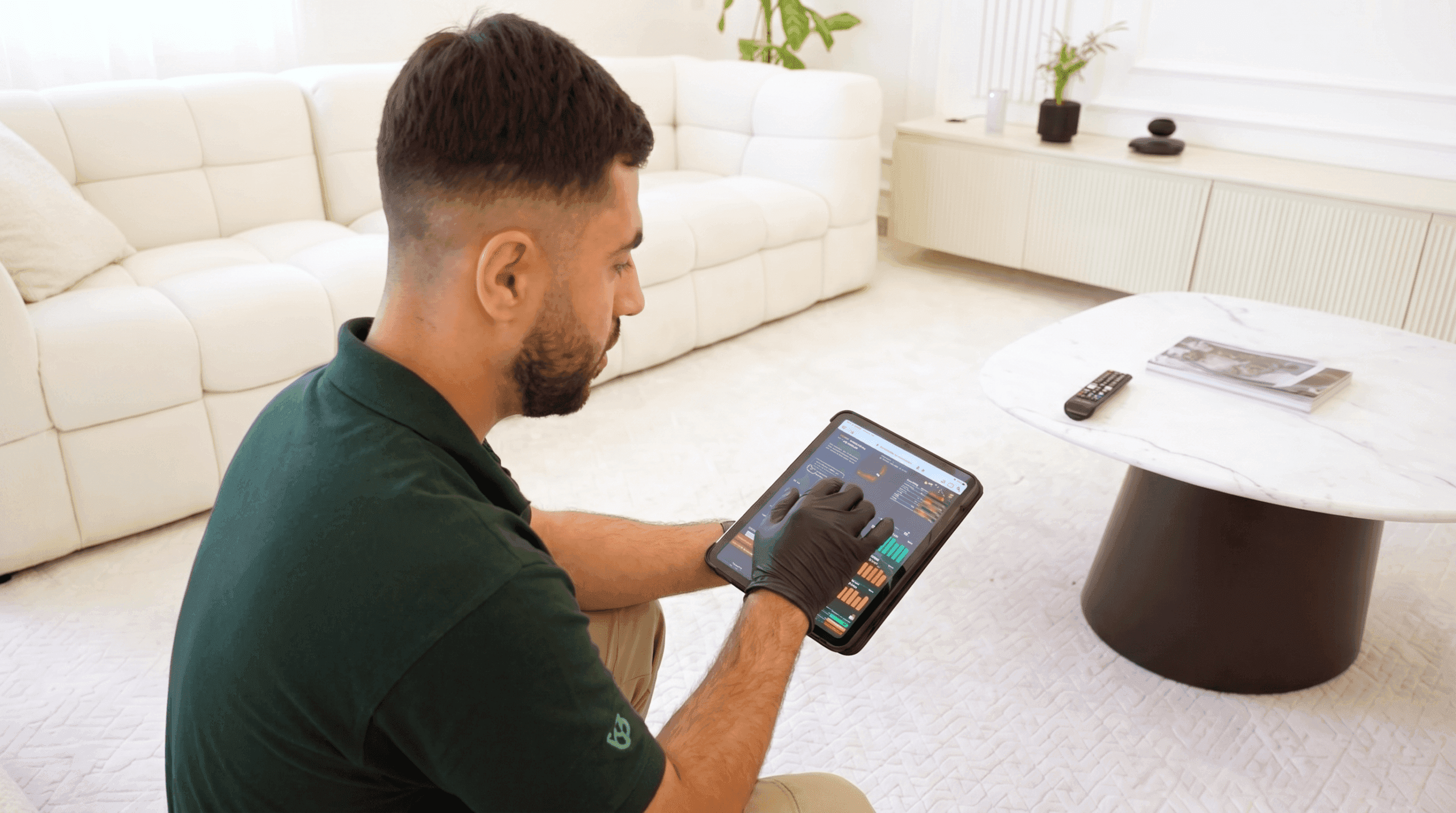
If you're considering getting your home or office tested, here's what a properly run process generally involves:
1. Initial site assessment. A specialist walks through the space to understand layout, AC system type, ventilation setup, and any visible red flags like condensation, duct staining, or odor sources.
2. Sensor placement and monitoring. Calibrated sensors are placed in key areas of the home to track PM2.5, PM10, CO2, TVOCs, humidity, and temperature continuously over several days, capturing real variation rather than a single moment.
3. Data analysis. The readings are reviewed to identify patterns — when air quality is worst, what's driving it (ventilation, humidity, particulate buildup), and which rooms are most affected.
4. Tailored recommendations. Based on the actual data, a solution is proposed. This might mean improving fresh air ventilation, upgrading filtration, addressing humidity imbalance, or in some cases, duct sanitization rather than buying new equipment at all.
5. Implementation and follow-up. The recommended solution is installed and, ideally, the space is re-monitored afterward to confirm the improvement actually worked, not just assumed to.
This is fundamentally different from a sales visit where someone shows up, glances around, and tells you which purifier to buy. It's closer to a diagnostic process — assess first, treat second.
Common Questions People Search Before Booking an Assessment
Do I need air quality testing if my home doesn't smell bad? Yes. Most indoor air problems — elevated CO2, fine particulate buildup, VOC accumulation — are completely odorless. Smell is a poor indicator of air quality. Many of the worst-performing homes have no noticeable odor at all.
Is this only relevant for people with allergies or asthma? No. While people with respiratory sensitivities notice symptoms faster, poor indoor air quality affects everyone — through fatigue, reduced focus, disrupted sleep, and dry skin or eyes, even without a diagnosed condition.
What's the difference between this and just cleaning my AC or buying a purifier? Cleaning your AC addresses one possible factor. A purifier addresses another. But without knowing which factor is actually the problem in your specific space — humidity, ventilation, particulates, or something else — you're guessing. An assessment tells you exactly what to fix instead of treating symptoms randomly.
How long does proper testing take? A single visit can give a rough snapshot, but conditions change throughout the day and week based on occupancy, AC cycles, and weather. A multi-day monitoring period gives a far more accurate, realistic picture of how your space actually performs.
What kind of spaces benefit from this? Villas, apartments, offices, healthcare facilities, hospitality spaces, and educational environments all have different air performance challenges depending on occupancy levels, layout, and ventilation design. The right approach depends on how the space is actually used.
Why This Matters More Than People Think
Most people upgrade their home's comfort in obvious ways — better furniture, smart lighting, a stronger Wi-Fi router — without ever considering that the air they're breathing for 16+ hours a day indoors might be working against them. Unlike outdoor air pollution, which gets media attention and government monitoring, indoor air quality is almost entirely your own responsibility, especially in a climate like Dubai's where homes stay sealed and air-conditioned for most of the year.
The good news is that, unlike a lot of health and comfort issues, this one is measurable. You don't have to guess whether your symptoms are related to your environment. A proper assessment gives you actual data — not assumptions — and a solution based on what your specific space needs, not a generic fix.
If you've been dealing with unexplained fatigue, dry skin, recurring headaches, or a home that just never seems to feel fully "fresh" no matter how often you clean, it might be worth finding out what's actually in your air before assuming it's something else.

