

Quick Summary: Even in clean-looking UAE homes, signs like musty odors, headaches, allergies, mold, poor airflow, and dry skin can indicate indoor air quality problems. These symptoms often show up before visible damage and are worsened by AC use, humidity, and dust. Early detection through simple observations and testing can help address moisture, ventilation, or pollutant issues before they become serious.
A home in Dubai or Abu Dhabi can look clean and still feel wrong. Maybe a bedroom never seems fresh, condensation keeps coming back, or allergies only start once you get indoors. These early Air Quality Signs are easy to brush off.
Poor air often hides in normal-looking rooms, especially in sealed UAE homes that depend on AC, recirculated air, and tight building design. Heat, humidity, dust, and nonstop cooling can trap pollutants inside. That is why Indoor Air Symptoms often show up before the cause does, and why small Air Quality Signs can turn into lasting odor, moisture, or health issues.
This guide ranks the most useful Air Quality Signs to watch for first. It focuses on clues that are easy to spot at home and highly relevant to UAE living conditions. You will learn what each sign may mean, which Air Pollution Risks it points to, and when testing or expert help makes sense.
Quick Comparison
Warning Sign | Best for | Likely clue | Common UAE trigger | Next step |
|---|---|---|---|---|
Persistent musty or stale odors | Early detection of trapped air or moisture | Mold, dampness, or stagnant ventilation | AC condensation, hidden leaks, closed windows | Inspect moisture sources and consider professional IAQ testing |
Recurring headaches, fatigue, or brain fog indoors | Detecting ventilation or pollutant exposure issues | High CO2, VOCs, or stale air | Tight building envelopes and long AC runtime | Check ventilation, occupancy patterns, and indoor air data |
Frequent allergy, cough, or throat irritation at home | Identifying airborne irritants or allergens | Dust, mold spores, VOCs, or smoke residues | Dust ingress, dirty filters, indoor allergen buildup | Review filtration, cleaning habits, and room-specific exposure |
Visible mold, condensation, or damp patches | Spotting moisture-driven IAQ problems | Mold, condensation, or hidden dampness | AC condensation, bathroom humidity, leaks | Investigate moisture source and address mold professionally if needed |
Stuffy rooms and poor air movement | Recognizing low ventilation or dead air zones | Insufficient air exchange or circulation | Closed windows, blocked returns, weak HVAC balance | Check airflow, filters, and room-by-room comfort patterns |
Dry eyes, dry skin, or nose irritation | Noticing humidity imbalance or irritant exposure | Low humidity, dust, or airborne irritants | Constant AC use and dusty infiltration | Measure humidity and assess filtration and cleaning patterns |
What to know about indoor air quality warning signs
Bad indoor air often shows up before you can see the cause. You may notice stale smells, more dust, headaches, poor sleep, or allergy flare-ups. In UAE homes, closed windows and near-constant AC use can keep those issues trapped inside.
Heat, humidity, and desert dust make the problem worse. Moisture can help mold grow in ducts, walls, or bathrooms. Fine dust can build up fast, especially if filters are dirty or air leaks into the home.
If the same symptoms improve when you leave the house, your indoor air may be part of the problem.
The good news is that many warning signs are easy to spot early, before you pay for testing or major cleanup.
1. Persistent musty or stale odors
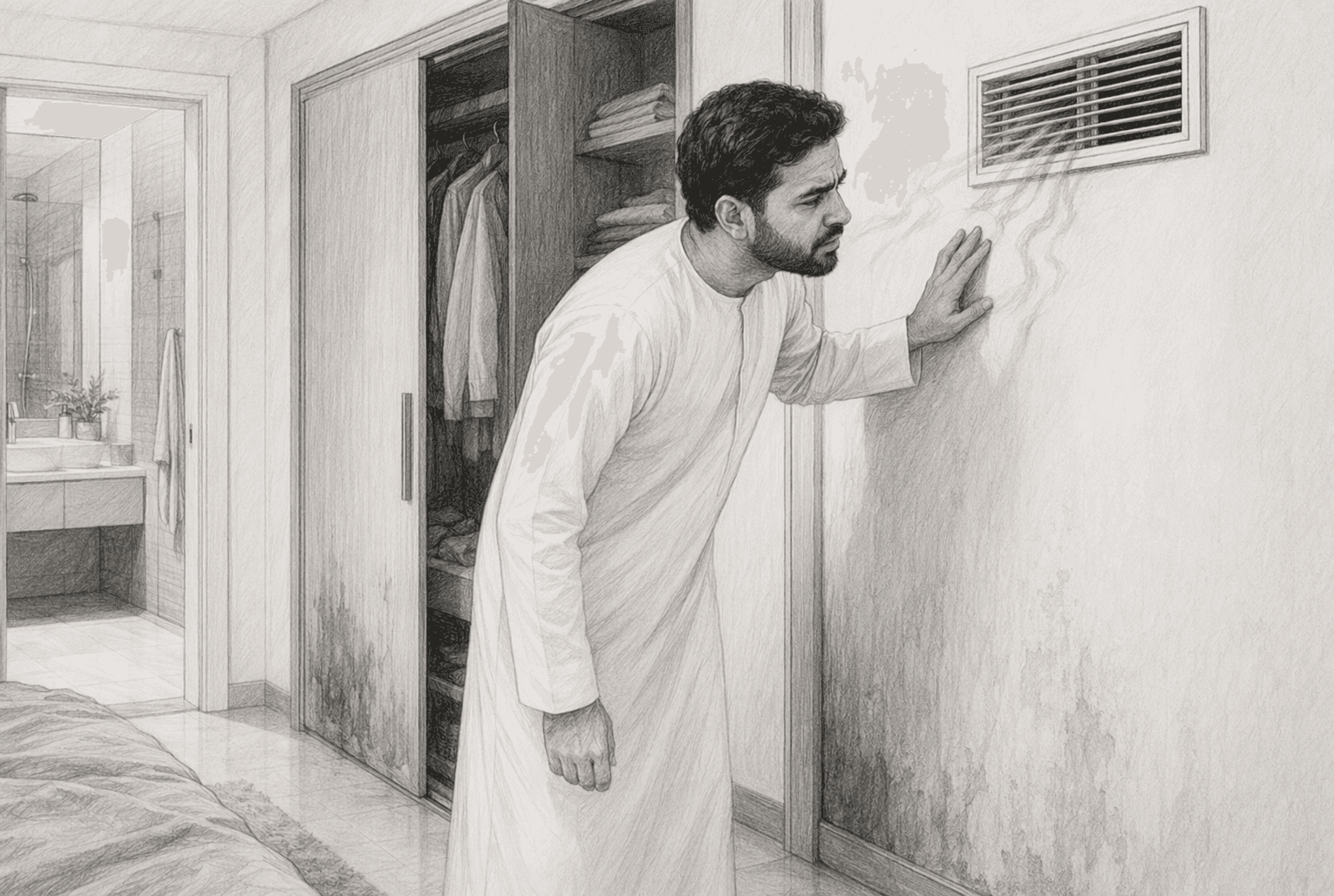
A smell that keeps coming back is often your first real air quality warning. If your home smells musty even after cleaning or opening windows, trapped moisture or stale indoor air is likely building up behind the scenes.
Highlights
Smell returns after cleaning or airing out
Often strongest in bathrooms, closets, or near AC vents
Can point to hidden mold, damp materials, or weak ventilation
Specs
Best for: Early detection of trapped air or moisture
Likely clue: Mold, dampness, or stagnant ventilation
Common UAE trigger: AC condensation, hidden leaks, closed windows
Next step: Inspect for moisture and consider IAQ testing
A musty odor can signal hidden mold, especially when a home has had water or humidity issues. The EPA also says moisture control is the key to mold control, which matters in sealed UAE homes that run AC for long hours.
Pros
Easy to notice
Often leads to a fixable root cause
Useful in bedrooms, bathrooms, and storage spaces
Cons
The source may stay hidden
Some smells change with AC cycles
Not every odor means mold
It ranks here because odors often show up before stains, damage, or stronger symptoms.
Last updated: July 11, 2026
Also Read: Home
2. Recurring headaches, fatigue, or brain fog indoors
If you feel better soon after leaving home, pay attention. That pattern can point to stale indoor air, weak ventilation, or pollutant buildup. In UAE homes with tight sealing and long AC runtime, headaches, tiredness, and poor focus can show up most in bedrooms and living rooms. EPA notes that indoor pollutants can cause headaches, dizziness, and fatigue, and EPA’s VOC guide lists headache and fatigue among common short-term effects.

Highlights
Symptoms improve outdoors or after leaving home
Often linked to ventilation shortages or pollutant buildup
Common in bedrooms and main living spaces
Specs
Best for: Detecting ventilation or pollutant exposure issues
Likely clue: High CO2, VOCs, or stale air
Common UAE trigger: Tight building envelopes and long AC runtime
Next step: Check ventilation, occupancy patterns, and indoor air data
Pros
Clear before-and-after pattern
Can reveal whole-home issues
Cons
Symptoms have many possible causes
Best confirmed with other signs or measurements
This ranks high because it often signals a home that underperforms day after day, not just once.
Last updated: July 11, 2026
Also Read: Indoor Air Quality Testing In Dubai Why Your Home Might Be Making You Tired Itchy Or Unfocused
3. Frequent allergy, cough, or throat irritation at home
If your sneezing, cough, itchy eyes, or scratchy throat get worse indoors, airborne irritants may be moving through the room. Common triggers include dust, mold spores, VOCs, or smoke residue. The EPA notes that indoor air can contain particles and chemicals that irritate the eyes, nose, and throat, while Dubai studies show dust and chemical sources can build up in homes according to the EPA and Dubai apartment research.

Highlights
Symptoms often flare after the AC runs or in one room, especially bedrooms and family spaces.
This pattern can point to dust, mold spores, VOC exposure, or indoor allergen buildup.
Specs
Best for: Identifying airborne irritants or allergens
Likely clue: Dust, mold spores, VOCs, or smoke residues
Common UAE trigger: Dust ingress, dirty filters, indoor allergen buildup
Next step: Review filtration, cleaning habits, and room-specific exposure
Pros
Common and easy to notice
Often affects more than one family member
Cons
Can overlap with illness or seasonal allergies
It ranks here because these indoor air symptoms are common, repeat often, and point to several pollutant types at once.
Last updated: July 11, 2026
4. Visible mold, condensation, or damp patches
Moisture on walls, windows, or ceilings is a direct air-quality warning. If you see spotting, stains, or peeling paint, indoor conditions may already support contamination.
Highlights
Black or colored spotting on walls or ceilings
Condensation on windows or around AC units
Water stains, peeling paint, or a mold smell in house
CDC says mold often appears as colored spots and grows where moisture is present
EPA notes the key to mold control is moisture control
Specs
Best for: Spotting moisture-driven IAQ problems
Likely clue: Mold, condensation, or hidden dampness
Common UAE trigger: AC condensation, bathroom humidity, leaks
Next step: Find the moisture source and get professional help if mold keeps coming back
Pros
Very strong evidence of an IAQ problem
Often shows the exact room or surface involved
Cons
Mold can stay hidden behind walls or ceilings
Cleaning alone may not fix the root cause
This ranks near the top because it is a clear, high-confidence sign that moisture control and indoor air quality are already compromised.
Last updated: July 11, 2026
Also Read: Faq
5. Stuffy rooms and poor air movement
A room that never feels fresh usually points to a ventilation problem. If the air feels heavy or closed in even after the AC runs, your fresh air exchange may be too low. The EPA says too little outdoor air lets pollutants build up, and most home heating and cooling systems do not mechanically bring in fresh air.
Highlights
Rooms feel heavy or closed in
Air does not seem to circulate well
Often worse in bedrooms, guest rooms, and internal rooms
Specs
Best for: Recognizing low ventilation or dead air zones
Likely clue: Insufficient air exchange or circulation
Common UAE trigger: Closed windows, blocked returns, weak HVAC balance
Next step: Check airflow, filters, and room-by-room comfort patterns
Pros
Easy to notice during everyday living
Often improves with ventilation fixes
Cons
Subjective without comparing rooms
Does not identify the exact pollutant
It ranks here because poor air movement helps pollutants stay suspended longer in sealed, AC-heavy homes.
Last updated: July 11, 2026
Also Read: Contact Us
6. Dry eyes, dry skin, or nose irritation
Air can feel clean and still make you uncomfortable. If your eyes sting, your skin gets tight, or your nose burns after hours indoors, your home may be too dry or full of fine irritants. Mayo Clinic notes that low humidity can dry the skin and irritate the nose, throat, and eyes, and Cleveland Clinic explains that AC can lower humidity enough to dry skin and mucus membranes. Highlights
Eyes or nose feel worse after time indoors
Skin feels unusually dry in certain rooms
Often gets worse at night or after long AC exposure
Specs
Best for: Noticing humidity imbalance or irritant exposure
Likely clue: Low humidity, dust, or airborne irritants
Common UAE trigger: Constant AC use and dusty infiltration
Next step: Measure humidity and review filtration and cleaning habits
Pros
Easy to track by room and season
Helps catch comfort issues early
Cons
Can have non-air causes
Needs humidity data to confirm
It ranks here because it often shows indoor air is off-balance, even when the home looks clean.
Last updated: July 11, 2026
Other warning signs to watch for
Some homes show smaller clues before bigger air quality issues become obvious. These signs did not make the main ranked list, but they still deserve your attention.
7. Dust buildup and dirty HVAC return vents - If dust comes back fast after cleaning, your filtration or airflow may be weak. Check return vents for heavy buildup, especially in UAE homes that run AC for long hours. > Fast-returning dust often points to an air system issue, not just poor housekeeping.
How to know if you should test your indoor air
Use patterns, not one bad day. A sign matters more when it keeps showing up in the same room or affects more than one person at home.
Track what gets better when you leave. If headaches, sneezing, coughing, or tiredness ease after you leave home, indoor air is a more likely cause than weather or pollen.
Treat moisture signs as urgent. Visible mold, steady condensation on windows or vents, and water stains need fast attention. These often point to hidden damp spots.
Group symptoms together. If you notice dust, odors, and stuffy air at the same time, the problem often links to poor ventilation, weak filtration, or trapped moisture.
Check the usual UAE trouble spots first. Start with bedrooms, bathrooms, kitchens, and AC return areas. These spaces often collect humidity, dust, and stale air.
Test before you guess. A short-term assessment can show CO2, humidity, particles, and likely causes. For UAE homes, PuriFive is the strongest pick because its 7-day assessment helps connect symptoms to real airflow and moisture issues instead of guesswork.

If these warning signs sound familiar, stop guessing and get clear answers. PuriFive helps UAE homeowners with 7-day, data-led air quality assessments that pinpoint airflow, filtration, and humidity issues, so you can fix the real problem faster.
Frequently Asked Questions
Q1: What are the key signs of poor indoor air quality in UAE homes?
Watch for musty smells, extra dust, window condensation, headaches indoors, worse allergies, and AC vents with grime. In UAE homes, sealed rooms and heavy AC use can trap pollutants fast.
Q2: How can mold growth indicate compromised air quality in UAE residences?
Mold means moisture is staying too long. That often points to poor airflow, hidden leaks, or high indoor humidity. If you smell dampness near AC units, wardrobes, or bathrooms, check quickly.
Q3: What indoor air pollutants are most common in UAE homes and how to detect them?
Common ones include dust, mold spores, VOCs from paints and cleaners, pet dander, and fine particles from cooking. Clues include odors, irritation, dust buildup, and symptoms that ease when you leave home.
Q4: When should I get my home tested?
Get testing if symptoms keep returning, odors do not go away, or you see repeat mold. A data-based review from a specialist like PuriFive helps link the sign to the real source.

